The Engineering Excellence of Stucco Netting
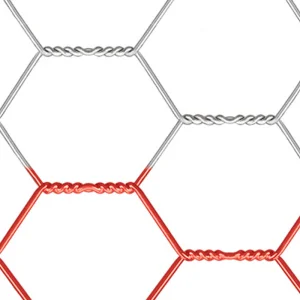
In the realm of global architecture and construction, the structural integrity of a building starts from its reinforcement layers. Stucco Netting, often referred to as poultry netting or hex wire mesh, serves as the critical backbone for cement and plaster applications in diverse climates. As an industry-leading exporter, we understand that high-performance construction requires more than just wire; it requires precision engineering, corrosion resistance, and structural consistency.
Global Procurement Dynamics: Bridging Supply and Demand
Procurement professionals and general contractors globally face a common challenge: securing consistent material quality amidst volatile raw material markets. Our approach to supplying Stucco Netting is rooted in "Vertical Integration." By controlling the supply chain from raw steel rods to the final galvanization process, we ensure that every square meter of netting meets international standards like ASTM A641 or BS EN 10223.
For international buyers, the challenge lies in logistics and compliance. We provide not just the product, but a macro-industry solution that includes:
- Just-in-Time (JIT) Inventory Management: Reducing your warehousing overhead.
- Logistical Optimization: Container utilization strategies to minimize shipping costs per unit.
- Regulatory Alignment: Ensuring all materials meet local building codes and fire safety regulations.
Technical Roadmap: Beyond Basic Reinforcement
Stucco netting is evolving. Modern smart-buildings demand materials that accommodate thermal expansion and contraction without cracking. Our technical team is pioneering advancements in:
- Zinc-Aluminum Coating: A leap forward from traditional galvanization, offering 3x the lifespan in saline environments—critical for coastal construction projects.
- Dynamic Mesh Patterns: Designing netting with optimized flexibility to prevent shear stress in seismic-prone zones.
- Automated Weaving Precision: Utilizing CNC weaving technology to ensure uniform gauge and mesh size, eliminating "weak spots" that lead to structural failure.
Macro Industry Status & Future Outlook
The construction industry is shifting toward "Sustainability by Design." Our roadmap for the next decade focuses on reducing the carbon footprint of manufacturing. We are currently implementing solar-powered production lines and closed-loop water treatment systems for our wire drawing facilities. By choosing our export services, you are not just purchasing a commodity; you are partnering with an enterprise committed to the Industry 4.0 revolution in building materials.
Localization, Compliance, and E-E-A-T
Google’s E-E-A-T (Experience, Expertise, Authoritativeness, Trustworthiness) guidelines are not just for search engines; they are the bedrock of our business. Our Experience spans over two decades of international trade. Our Expertise is validated by our onsite engineering staff who conduct rigorous batch testing. Our Authoritativeness is built on our supply history for projects ranging from residential housing developments to large-scale infrastructure projects. We provide full documentation—Material Test Reports (MTR), Certificates of Origin, and Compliance declarations—ensuring that customs clearance and site inspection are frictionless.
FAQ: Critical Insights for Procurement Managers
Q: What is the ideal wire gauge for standard residential stucco projects?
A: Generally, 20-gauge is the industry standard for residential applications. However, for high-impact zones or thicker cement applications, we recommend moving to an 18-gauge to prevent deformation.
Q: How does Stucco Netting contribute to structural longevity?
A: By providing a mechanical key for the plaster, the netting ensures uniform distribution of tension across the wall surface, significantly reducing micro-cracking caused by building settlement and thermal stress.
Q: Do you provide support for international regulatory compliance?
A: Yes. We maintain an up-to-date database of ASTM, ISO, and regional building standards. We provide customized documentation to ensure our products pass local inspections in any jurisdiction.
Q: What are the primary differences between Galvanized and PVC-coated netting?
A: Galvanized netting is essential for cementitious adhesion. PVC coating, while excellent for corrosion resistance, is typically reserved for specialized landscaping or security fencing, not standard stucco reinforcement.