Expert Guide to Global Procurement, Quality Assurance & Manufacturing Excellence
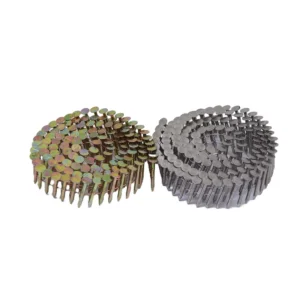
In the contemporary landscape of high-speed construction and industrial automation, the coil nail has become an indispensable fastening solution. Unlike bulk nails, coil nails are engineered for precision, consistency, and speed. As a global procurement professional, understanding the manufacturing nuances—from wire drawing to the intricate welding process—is critical to achieving a high Information Gain regarding supplier quality.
Modern Chinese coil nail factories have evolved from simple labor-centric models to highly automated, IoT-integrated production hubs. The competitive advantage lies in supply chain depth. By integrating upstream wire rod production with downstream pneumatic nail assembly, leading manufacturers in Hebei and beyond can control metallurgical properties from the atomic level. This ensures that every collation—whether plastic or wire-welded—maintains structural integrity under high-pressure pneumatic firing, minimizing tool jams and structural failures on the job site.
Reliability is non-negotiable. Top-tier manufacturers strictly adhere to international benchmarks such as ASTM F1667 (Standard Specification for Driven Fasteners), Eurocode 5 for structural timber, and ISO 9001 quality management systems. Compliance with these standards is not just a certification; it is proof of the manufacturer’s commitment to safety in critical infrastructure applications. When sourcing, demand evidence of corrosion resistance testing (e.g., salt spray tests exceeding 500 hours for hot-dipped galvanized nails).
A "one-size-fits-all" approach to coil nails leads to project failure. Our engineering analysis suggests a strict categorization based on environment:
For international buyers, the challenge is bridging the gap between local factory capacity and global logistics demands. Effective procurement relies on transparency and localization. Manufacturers that provide local technical support, handle the complexities of containerized logistics, and offer compliance documentation are essential partners. Look for factories that utilize AI-driven QC (Quality Control) systems to monitor nail diameter variance, point sharpness, and collation spacing in real-time.
The industry is shifting toward "Smart Fasteners." We are witnessing a trend in the development of lightweight, high-strength alloys that reduce the weight of pneumatic equipment without sacrificing holding force. Furthermore, sustainable manufacturing practices—such as water recycling in wire drawing and cleaner galvanization processes—are becoming key differentiators for European and North American importers who prioritize ESG (Environmental, Social, and Governance) compliance.
Q: What is the primary difference between wire collated and plastic collated nails?
A: Wire collation is generally more robust and suitable for high-speed industrial nailing. Plastic collation is cleaner, as it leaves no sharp metal wire remnants, making it safer and ideal for finish carpentry and exterior roofing.
Q: How do you verify the quality of galvanized coil nails?
A: Look for the coating weight (g/m²) and the uniformity. High-quality manufacturers provide test reports indicating the salt-spray resistance duration. ASTM compliance is the gold standard.
Q: Can custom shank designs improve project efficiency?
A: Absolutely. Ring-shank and screw-shank designs are engineered for higher withdrawal resistance. Selecting the right shank based on the wood density of your specific project can reduce the total number of nails required, saving labor costs.