
What Is Hardware Cloth Used For?

Time:2026-10-14 Author:Madeline
0%

Hardwarecloth is a practical wire mesh, but its value depends on choosing the correct opening size, wire gauge, and coating. In gardens, it can support climbing plants, protect seedlings, and block rabbits from tender leaves. Around poultry runs, smaller openings help prevent contact with many common predators. It can also cover vents, reinforce compost bins, and protect crawl spaces without completely stopping airflow.

Industry research shows steady demand for wire mesh across agriculture, construction, and home improvement. Grand View Research identifies fencing and agricultural applications as important parts of the global wire mesh market. USDA APHIS biosecurity guidance also emphasizes physical barriers, controlled access, and protection from wild animals. Hardwarecloth supports these goals, although it is not a complete biosecurity system. That distinction matters.

Animal-welfare expert Dr. Temple Grandin has said, “The best way to improve animal welfare is to improve the design of facilities.” Her point applies here. A poorly installed panel can leave a two-inch gap beneath a coop door. A sharp cut edge can injure a curious hen. A thin coating may fail quickly in wet soil.

Small details matter.

In this guide, we will examine what hardwarecloth is used for, how mesh sizes affect performance, and where different materials work best. We will also question common assumptions. Hardwarecloth is strong, but not indestructible. It is useful, not magical. Correct installation, regular inspection, and realistic expectations create the reliable protection most projects actually need.
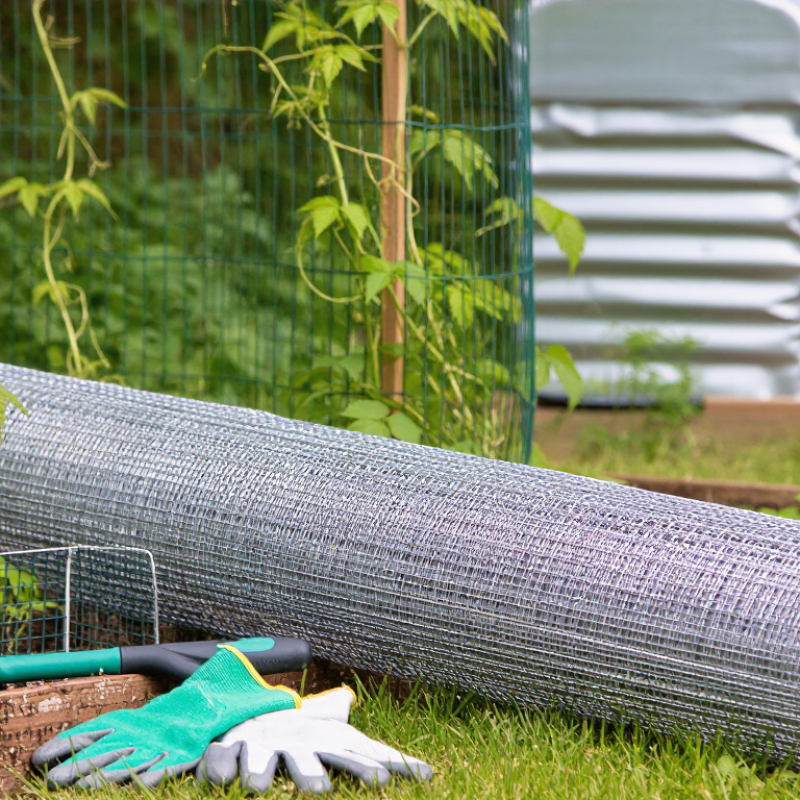
What Is Hardware Cloth Used For?

Hardware Cloth Defined: Welded Wire Mesh, ASTM A641, and Key Terms

Hardware cloth is a rigid welded wire mesh used for ventilation, screening, garden protection, and small animal enclosures. Unlike woven wire, its wires cross at fixed angles and are welded at every junction. This creates square or rectangular openings with stable dimensions. Common terms include mesh opening, wire diameter, gauge, panel size, and coating. A smaller opening blocks finer pests, while thicker wire resists bending and impact.

ASTM A641 is an important reference for zinc-coated carbon steel wire. It addresses zinc coating requirements, including coating quality and adhesion. However, ASTM A641 alone does not describe every finished hardware cloth panel. Buyers should also verify weld strength, opening size, wire diameter, and corrosion protection. Galvanized wire can resist outdoor moisture, but damaged cuts may rust earlier. I have seen installation problems caused by measuring only the roll width. The opening pattern matters too.

Tips: Measure the largest gap you need to block. Check the wire diameter, not just gauge. Inspect several welds before installation. Wear gloves when cutting, because sharp ends remain. Use suitable fasteners and protect exposed edges. A small mistake here can leave an unexpected gap.

Mesh Openings and Wire Gauges: Comparing 1/4-, 1/2-, and 1-Inch Sizes

Hardware cloth is used for garden barriers, poultry runs, vent covers, compost screens, and small-animal enclosures. Mesh opening and wire gauge decide its real performance. The Centers for Disease Control and Prevention’s Healthy Housing Reference Manual notes that mice can enter gaps around 1/4 inch wide. Therefore, 1/4-inch mesh offers the strongest exclusion among these common sizes. It also blocks many small insects, but its tighter weave restricts airflow and costs more per square foot.

Half-inch mesh is a practical middle choice. It allows better ventilation while stopping many larger rodents and small predators. One-inch mesh is lighter and easier to cut. However, it leaves enough space for mice, young birds, and some snakes. Wire gauge matters too. A lower gauge means thicker wire. For example, 19-gauge wire is about 0.042 inches thick, while 23-gauge wire is about 0.028 inches. USDA APHIS wildlife-management guidance emphasizes closing small access points and using durable barriers, but field conditions still matter. Rust, bending, and poor fastening can defeat a good specification.

Tips: Match the opening to the smallest animal you need to exclude. Choose 1/4-inch mesh for rodent-sensitive areas, 1/2-inch for general garden protection, and 1-inch for larger enclosures. Check the coating and edge strength. A heavy mesh is not automatically better. In my experience, many failures begin at corners, not in the mesh itself. Measure twice, then reinforce exposed edges.

Pest Control Uses: Why 1/4-Inch Mesh Excludes Rodents and Small Pests

Hardware cloth is a practical barrier for protecting gardens, poultry areas, compost bins, and foundation openings.

Its 1/4-inch mesh creates small openings that block many rodents, snakes, and crawling pests. It also allows airflow and light, unlike solid panels.

In field repairs, I have found that mesh size matters as much as the material’s strength. A mouse may exploit a weak corner, lifted edge, or damaged section. Four-millimeter openings are commonly chosen because they leave little room for small pests to pass through. However, no barrier is perfect. Persistent rodents can chew soft materials, dig beneath edges, or use nearby debris as a climbing route. Secure installation remains essential.

Tips: Overlap seams by at least several inches, then fasten them firmly. Bend the lower edge outward and bury it several inches around animal enclosures. Check the barrier after storms, freezing weather, and gardening work. Look closely at corners. Small gaps matter. Use sturdy staples, screws, or ties suited to the supporting surface. Keep weeds, boards, and stored containers away from the mesh, since they can create hiding places and access points. I sometimes inspect too quickly and miss a gap behind a post, so a slow hand check is worthwhile. For vents, cover the opening without blocking necessary airflow. Local pest pressure may require a different design.

Garden and Compost Protection: Choosing 1/2- to 1-Inch Mesh

Hardware cloth protects garden beds, seed trays, and compost bins with a rigid metal barrier. For most gardens, 1/2-inch mesh offers a practical balance between airflow and animal exclusion. It can deter birds, rabbits, and larger insects around young plants. However, it will not reliably stop mice. The Centers for Disease Control and Prevention notes that mice can pass through openings about 1/4 inch wide. That detail is easy to miss.

Use 1/2-inch mesh beneath compost bins and around raised beds when rabbits are the main concern. Bury the lower edge 4 to 6 inches, then bend it outward underground. This prevents animals from pushing underneath. For compost lids, fasten the cloth tightly with staples, screws, or wire. Leave no lifted corners. Small gaps become obvious entry points after rain or frost.

A 1-inch mesh works better for larger compost enclosures. It improves ventilation and allows worms, beetles, and other decomposers to move more freely. It may still exclude larger animals, but squirrels can exploit wide openings. The U.S. Environmental Protection Agency reported that food made up about 24% of material in municipal solid waste landfills in its 2018 data. Better compost protection can help keep kitchen scraps in a managed system. Still, mesh alone is not enough. A secure lid, balanced moisture, and regular turning matter too. I would not call any mesh choice perfect; local pests and bin design can change the result.

Galvanized Versus PVC-Coated Cloth: Corrosion Resistance and ASTM Standards

What Is Hardware Cloth Used For?

Hardware cloth is a rigid wire mesh used for garden screens, animal enclosures, vents, and small barriers. Openings control airflow while limiting access by rodents, birds, or falling debris. Material choice matters most where moisture stays trapped.

Galvanized cloth uses a zinc coating to protect steel through a sacrificial action. When the surface is scratched, zinc can still protect nearby steel. This makes galvanized mesh practical for outdoor framing, though salt air and fertilizer can shorten its service life.

PVC-coated cloth adds a plastic barrier over the metal. It resists moisture, soil chemicals, and frequent handling well. However, cuts, pinholes, or sharp bends can expose the underlying wire. That weakness is easy to overlook.

ASTM A641 commonly covers zinc-coated carbon steel wire, including coating requirements and test methods. PVC-coated mesh may follow separate wire, coating, or welded-mesh specifications. There is no single ASTM rule for every hardware cloth product. Buyers should check the stated wire diameter, opening size, coating thickness, adhesion, and test method. A certificate helps, but it does not replace inspecting the roll. In practice, I have seen heavy PVC coating hide thin wire. That is not always a quality failure, but it deserves a closer look. For wet coastal sites, PVC may be the safer choice. For easier cutting, reshaping, and lower cost, galvanized mesh can be more practical.

FAQS

What is hardware cloth?

Hardware cloth is rigid welded wire mesh. Its wires are welded at every junction. This creates stable square or rectangular openings. It supports ventilation, screening, gardens, and small animal enclosures.

How is welded mesh different from woven wire?

Welded mesh keeps wires at fixed angles. Woven wire can shift more easily. The welded pattern usually holds its shape better. That stability helps during cutting and installation.

What does ASTM A641 cover?

ASTM A641 covers zinc-coated carbon steel wire. It addresses zinc coating quality and adhesion. It does not describe every finished mesh panel. Check weld strength, opening size, wire diameter, and coating protection separately.

Why does wire diameter matter?

Thicker wire usually resists bending and impact better. Gauge alone may be confusing between suppliers. Measure the actual wire diameter when possible. A thin wire can fail at a stressed corner.

Is 1/4-inch mesh suitable for small pests?

A 1/4-inch opening blocks many rodents and crawling pests. It also allows light and airflow. No barrier is perfect. Mice may exploit weak corners, lifted edges, or damaged sections.

How should mesh be installed around animal enclosures?

Overlap seams by several inches. Fasten them firmly with suitable staples, screws, or ties. Bend the lower edge outward and bury it several inches. Inspect corners after storms, frost, and nearby gardening work.

Which mesh size suits garden beds?

Half-inch mesh often balances airflow and animal exclusion. It can deter rabbits, birds, and larger insects. It will not reliably stop mice. For mouse control, use smaller openings.

Is one-inch mesh suitable for compost bins?

One-inch mesh improves ventilation in larger compost enclosures. It allows worms, beetles, and other decomposers to move more freely. It may still allow squirrels through. Use a secure lid and maintain balanced moisture.

How can exposed mesh edges be made safer?

Wear gloves when cutting. Sharp wire ends can cause injuries. Protect exposed edges with suitable trim or folded sections. I sometimes inspect too quickly, so a slow hand check helps.

What mistakes should buyers avoid?

Do not measure only the roll width. Confirm the opening pattern and wire diameter. Check several welds before installation. A small gap can defeat an otherwise strong barrier.

Conclusion

Hardware cloth, often written as hardwarecloth, is a welded wire mesh used for reinforcing, enclosing, filtering, and protecting outdoor spaces. It is commonly made from steel wire manufactured to recognized specifications such as ASTM A641, with performance determined by wire diameter, mesh opening, coating, and construction quality. The most important size choices are 1/4-inch, 1/2-inch, and 1-inch openings. Smaller openings provide stronger exclusion, while larger openings offer easier handling and better airflow.

For pest control, 1/4-inch mesh is useful for blocking rodents and many small garden pests when installed securely around vents, openings, or enclosures. Garden beds, compost bins, and poultry areas often use 1/2- to 1-inch mesh when protection from larger animals is the main goal. Galvanized hardwarecloth resists rust through a zinc coating, while PVC-coated mesh adds another protective layer and can improve handling safety. Selecting the right opening size, wire gauge, and corrosion-resistant finish helps ensure long-lasting performance for each project.

Madeline

Madeline

Madeline is a dedicated marketing professional with a wealth of expertise in our company's core offerings. With a keen understanding of the industry, she brings a unique perspective to her role, consistently delivering high-quality content that highlights the superior aspects of our products. As......