
Choosing the right wire mesh begins with the job it must do. A screen around a machine faces different demands from a filter basket, garden fence, or concrete reinforcement. Opening size, wire diameter, alloy, weave, and finish all affect performance. Get one wrong, and a panel may clog, sag, corrode, or fail to contain what it should. Small choices matter.
Material supply offers useful context, but it cannot make the decision for you. The World Steel Association’s World Steel in Figures 2024 reports global crude steel production of about 1.89 billion metric tonnes in 2023. That figure signals the scale of steel production; it does not tell you which grade suits a specific installation. Corrosion also deserves attention. AMPP’s IMPACT study estimated the annual global cost of corrosion at US$2.5 trillion, based on 2013 data. This is a broad estimate, not a prediction of the cost for any one project. Details matter.
This guide explains how to match mesh specifications to load, exposure, flow, and required opening size. It also compares common materials and finishes, and flags details worth confirming with a supplier, such as tolerances and edge treatment. A stainless option may last longer in a wet setting, but it can add cost without solving every problem. There is no perfect choice. Measure the opening, consider the environment, and ask what failure would look like before placing an order.
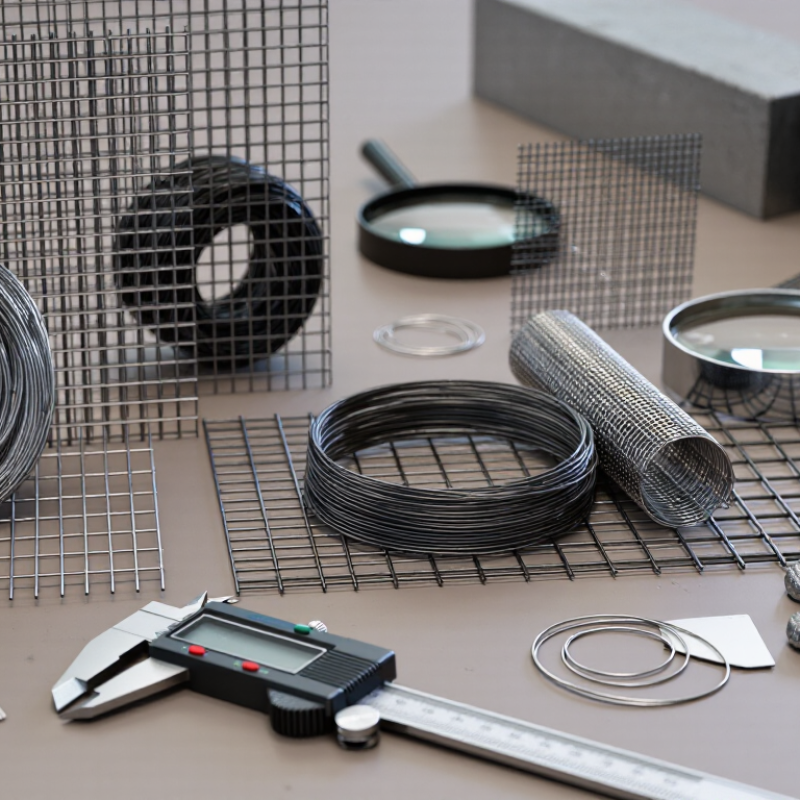
A mesh choice should begin with the job it must do, not with a preferred material or opening size. For load-bearing use, check wire diameter, aperture, span, and support spacing together. A heavy panel can still flex if its frame is too wide. Ask what loads it will actually face, including vibration or occasional impact. Guessing from appearance alone is a weak starting point.
For filtration, define the particle size and acceptable flow rate before selecting an opening. Finer mesh may capture more, but it can clog faster and restrict flow. Safety needs a different check: look for sharp edges, likely contact, and whether the mesh can deform under pressure. Exposure matters, too. Moisture, cleaning chemicals, heat, and outdoor weather can affect material choice and service life. Inspect the installation details, not just the mesh sample. A sample may look rigid on a bench yet behave differently when tensioned across a large frame. There is rarely one perfect specification. Sometimes the first choice needs revision after a small trial, and that is useful evidence, not failure.
Define the project duty: balance load, filtration, safety, and exposure before selecting a mesh.
Smaller openings provide finer screening but can reduce flow and increase clogging risk. Larger openings generally allow greater flow. The chart compares theoretical openings using 0.20 mm wire; the opening is calculated as 25.4 divided by mesh count, minus wire diameter, in millimeters. For load-bearing or safety applications, also check wire strength, material, weave, support, and applicable standards. Confirm corrosion, temperature, and chemical exposure requirements with the supplier.
Choosing wire mesh starts with the opening your project needs, not just the mesh count.
Mesh count means the number of openings per inch, measured from one wire center to the next. A higher count usually creates smaller openings, but wire diameter changes the result.
For example, a fine screen with thick wires may have less open area than expected. Check the stated aperture, or clear opening, alongside the count.
Match aperture to the particles you need to retain, then consider how much airflow or liquid flow must pass through. A narrow opening can improve separation, but it may clog sooner.
Wire diameter affects strength and open area: thicker wire can better withstand handling, while thinner wire leaves more room for flow.
Small details matter. Measure a sample with calipers if the fit is critical, and confirm the supplier’s measurement method.
I have seen selection discussions focus too heavily on count alone; it is an easy shortcut, but not a reliable specification.
Note the required opening, wire diameter, and operating conditions together. If the mesh will face abrasion or repeated cleaning, test a small section first.
The ideal balance may need adjustment after real use.
How to Choose the Right Wire Mesh for Your Project?
Compare 304 Stainless Steel (18–20% Cr) with 316 (2–3% Mo)
304 stainless steel contains about 18–20% chromium and offers dependable corrosion resistance for many indoor and general-purpose uses. It can suit dry storage areas, screens, and equipment exposed to occasional moisture. Grade 316 adds roughly 2–3% molybdenum, which improves resistance to pitting from salt and chloride exposure. Think coastal air, washdown zones, or brine splashes. It is not corrosion-proof, though. Concentrated chlorides, deposits, and poor cleaning can still cause damage.
The extra molybdenum often makes 316 the safer choice in harsher environments, but the mesh design matters too. Check wire diameter, opening size, weave, and whether the mesh will be welded or formed. A fine opening may trap residue, while a heavier wire can reduce airflow. A grade label alone cannot predict service life. I would verify the actual exposure and supplier’s material documentation before specifying either grade; that step is easy to skip.
Tips: Match the alloy to the worst regular exposure, not just the room’s average conditions. If unsure, compare samples in the real setting and inspect them over time. That is not a perfect test, but it can reveal details a chart misses.
| Comparison Factor | 304 Stainless Steel | 316 Stainless Steel | What It Means for Your Project |
|---|---|---|---|
| Typical composition | Chromium: 18–20%; nickel: 8–10.5%; molybdenum: generally not intentionally added. | Chromium: 16–18%; nickel: 10–14%; molybdenum: 2–3%. | These are typical grade ranges; verify the applicable material specification and mill certificate for the exact product. |
| General corrosion resistance | Good resistance in many indoor, dry, and mildly corrosive environments. | Typically better resistance than 304 in chloride-bearing and more aggressive environments. | Choose based on the actual exposure, including moisture, cleaning chemicals, salts, and process fluids. |
| Chlorides and salt exposure | More susceptible to pitting and crevice corrosion in chloride-rich conditions. | Molybdenum improves resistance to pitting and crevice corrosion in chloride-containing environments, but does not make the alloy immune. | Consider 316 for coastal, marine, or salt-exposed service; assess concentration, temperature, deposits, and cleaning practices. |
| Common applications | General-purpose screens, guards, filters, food-processing equipment, and architectural mesh in less aggressive settings. | Marine and coastal equipment, chemical-processing components, and other applications where chloride exposure is a concern. | Application suitability depends on operating conditions, fabrication, and maintenance—not grade alone. |
| Relative material cost | Usually the lower-cost option. | Usually costs more because of its alloying content, including molybdenum. | Prices vary with market conditions, mesh specification, finish, and order quantity. Compare lifecycle cost as well as purchase price. |
| Mesh opening and wire diameter | Opening size, wire diameter, weave, and tolerances are specified independently of the alloy grade. | Confirm aperture, wire diameter, and construction against filtration, screening, strength, and flow requirements. | |
| Selection guide | Often a practical choice for general service where chloride exposure is limited. | Often preferred when improved resistance to chloride-related corrosion is needed. | For severe or unusual environments, consult a corrosion specialist and confirm compatibility through testing or applicable design guidance. |
Wire mesh selection should start with its exposure, not just its opening size. Dry indoor storage presents a different risk from coastal air, road salt, or damp soil. Moisture and chlorides can attack zinc coatings faster, especially at cut ends, bends, and joints where water collects. Small details matter.
ASTM A641/A641M covers zinc-coated carbon steel wire and sets coating requirements according to wire and coating classifications. When comparing mesh, specify the required coating class and confirm it on the product documentation; “galvanized” alone does not describe the coating amount.
The AMPP IMPACT study estimated global corrosion costs at US$2.5 trillion in 2013, or 3.4% of global GDP. It also estimated that better corrosion management could save 15–35% of those costs.
Those figures concern corrosion broadly, not wire mesh alone, but they show why exposure-based specification matters. For a salty or persistently wet site, ask a qualified engineer whether the specified zinc coating is adequate for the expected service conditions. A standard helps define the material. It cannot account for every trapped-water seam or damaged edge in the finished installation.
Choosing wire mesh starts with the drawing, not the product label. Check the wire diameter, spacing, sheet size, and required open area against the project specification. Open area is the portion left clear between wires. For a regular grid, compare each clear opening with its center-to-center spacing in both directions. Measure, don’t guess. A tape measure can reveal a mismatch, but it cannot confirm every wire’s size or weld quality.
Open area affects concrete flow and how easily aggregate passes through the mesh. If openings are too small for the specified mix, placement may become difficult around congested reinforcement. If they are larger than designed, the reinforcement layout may no longer match the engineer’s intent. Check the drawings. Also confirm whether dimensions refer to wire centerlines or clear openings; that small distinction is easy to miss in a rushed order.
For welded concrete reinforcement, ASTM A1064/A1064M covers carbon-steel wire and welded wire reinforcement, including plain and deformed wire. The standard addresses material and performance requirements, but citing it alone does not establish that a mesh suits every project. Verify the specified edition, wire size, spacing, and documentation with the project requirements. Field checks help, though they are not a substitute for required inspection records. One detail may still need clarification. Ask the designer or engineer before accepting a panel when its measured openings differ from the approved schedule.
Start with the job: load support, filtration, safety, or exposure. Check the frame, supports, vibration, and possible impact. Appearance alone is not enough.
Mesh count measures openings per inch, from wire center to wire center. Aperture is the clear space between wires. Check both.
Match the aperture to the particles you need to retain. Smaller openings may capture more, but can clog and restrict airflow or liquid flow. Test the balance.
Thicker wire can improve strength but reduce open area. Thinner wire allows more flow, though it may be less sturdy. Measure critical samples with calipers.
No. Include aperture, wire diameter, and operating conditions. I have sometimes focused too much on count; that shortcut can miss important details.
It can suit many indoor and general-purpose settings, including dry storage and occasional moisture. Check the actual exposure before specifying it.
Its added molybdenum improves resistance to pitting from salt and chlorides. Coastal air, washdown areas, and brine splashes may justify it. It is not corrosion-proof.
Check sharp edges, pressure, cleaning chemicals, heat, weather, weave, and fabrication. Tensioned mesh may behave differently from a bench sample. A small trial can reveal problems, but it is not a perfect test.
Choosing the right wire mesh starts with defining the project’s duty. Consider the loads it must carry, the level of filtration or safety required, and the conditions it will face, such as moisture or corrosive exposure. Then select the aperture and wire diameter: smaller openings provide finer screening, while thicker wire can offer greater strength. Mesh count refers to the number of openings per inch, so check it alongside aperture size and wire thickness to understand the mesh’s actual performance.
Material and standards also matter. Grade 304 stainless steel typically contains 18–20% chromium, while grade 316 includes 2–3% molybdenum for improved resistance to certain corrosive environments. Match corrosion protection to the exposure, and verify open area, dimensions, and relevant specifications before ordering. ASTM A641 covers zinc-coated wire, while ASTM A1064 applies to welded wire reinforcement for concrete. These checks help ensure the wire mesh suits the project’s practical requirements.
