
Choosing the right dog kennel is more than comparing prices, sizes, and attractive colors. It directly affects safety, sleep, stress, and daily behavior. A suitable kennel should give your dog enough room to stand, turn, lie down, and stretch comfortably. It should also remain secure when your dog pushes against the door or chews nearby materials.
The American Pet Products Association’s 2023–2024 National Pet Owners Survey reported that approximately 65.1 million U.S. households own a dog. This large ownership base reflects strong demand for practical, welfare-focused housing products. Meanwhile, market reports from Grand View Research identify continued growth in pet-care spending, including home-use equipment and containment products. These figures do not prove every kennel is useful. They show why careful selection matters.
Safety comes first.
Veterinary behaviorist Dr. Karen Overall has emphasized that “the crate should never be used as punishment.” That principle should guide every buying decision. Look for smooth edges, reliable ventilation, escape-resistant latches, and flooring that will not trap paws. Measure your dog while standing and lying down, not only by breed label. A Labrador puppy and an adult Labrador need different arrangements.
A larger kennel is not automatically kinder. Excess space may encourage toileting in young dogs, while a cramped kennel can restrict natural movement. Consider travel, overnight use, cleaning, climate, and your dog’s temperament. Metal wire, plastic, and fabric models each have weaknesses. I would not choose solely from photographs; real-world durability is harder to judge, and that uncertainty deserves attention.
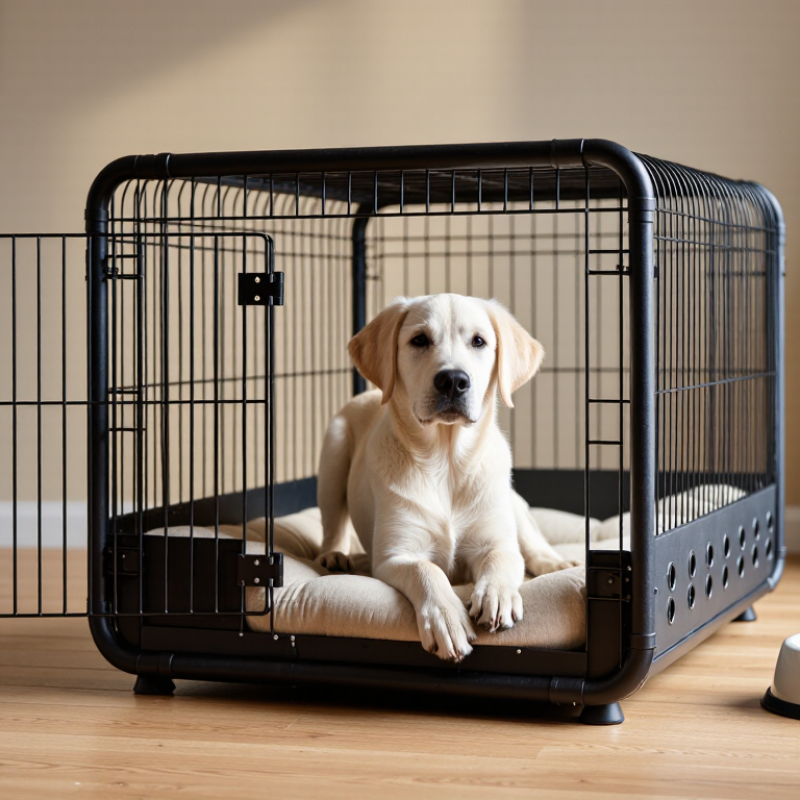
How to Choose the Right Dog Kennel?
Choosing the right dog kennel begins with accurate measurements, not weight alone. AKC crate-measurement guidance uses length and height as practical starting points. Have your dog stand naturally on a flat floor. Measure from the nose to the base of the tail, not the tail tip. Add about two to four inches for comfortable movement. For height, measure from the floor to the top of the head or ears, whichever is higher. Add two to four inches again. The kennel should allow standing without crouching, turning around, and lying fully stretched.
Measure twice. Small errors matter. A common mistake is measuring a relaxed dog while it is sitting. Recheck the length when your dog stands upright. For broad-chested dogs, inspect shoulder and hip clearance carefully. If your puppy is growing, select a kennel based on expected adult size and use a secure divider when appropriate. Too much unused space may create a separate toilet area during house-training. Still, measurements are starting points, not rigid rules. A long-backed dog may need extra length, while a dog with tall ears may require additional height. Watch the dog inside the kennel for several minutes. Crowded posture, repeated head lowering, or difficulty turning signals poor fit. Too much open space can also make some dogs feel exposed. Adjust thoughtfully.
How to Choose the Right Dog Kennel?
Kennel space should support natural movement, not merely contain your dog. For facilities covered by USDA rules, the enclosure must let a dog stand, turn around, sit, and rest in a normal position. These requirements are a useful reference for any owner, even when the rules do not directly apply.
Measure your dog while standing naturally. Check the distance from the floor to the top of the head, then compare it with the kennel’s interior height. Your dog should not need to crouch. Measure body length from the nose to the base of the tail. The floor should provide room for stretching and turning without pressing against the walls. Add bedding thickness to your calculation. It can reduce usable space more than expected.
Watch your dog enter the kennel. Does the back remain relaxed? Can the dog circle once before lying down? A nervous dog may refuse a space that looks large on paper. I once underestimated how much room a thick bed consumed. That mistake mattered. Bigger is not always better, either. Excess space may make some dogs feel exposed, while undersized space can restrict movement. Recheck the fit as your dog grows, gains weight, or develops joint stiffness. Measurements help, but daily observation remains essential.
The U.S. Department of Agriculture requires a primary enclosure to let a dog stand, sit, lie down, turn around freely, and make normal postural adjustments. For a simplified square-floor comparison, the minimum floor dimension is calculated as the dog's body length from nose to the base of the tail plus 6 inches.
Example calculations: an 18-inch body length requires approximately 24 × 24 inches of floor space, a 24-inch body length requires approximately 30 × 30 inches, and a 30-inch body length requires approximately 36 × 36 inches. Kennel height must also allow the dog to stand naturally and should be checked against the dog's shoulder height.
Reference: USDA Animal Welfare Regulations, 9 CFR § 3.6. The examples use body-length measurements and do not replace an assessment of the individual dog's height, posture, mobility, or kennel layout.
Material choice should begin with the IATA Live Animals Regulations, 50th edition, 2024. The crate must resist impact, pressure, and repeated handling. A sturdy plastic kennel works well for many dogs. It should have smooth interiors and no sharp edges. IATA guidance specifies ventilation openings covering at least 16% of the crate’s total surface area. Metal doors need secure, tamper-resistant locks. Two-piece plastic crates should use metal nuts and bolts, not weak plastic clips. Small details matter.
Wooden crates can provide strength for large dogs, but they add weight. They also absorb moisture and may hide damaged joints. IATA recommends an absorbent, leak-resistant floor that does not block ventilation. Avoid loose bedding, exposed nails, and decorative materials. A kennel should allow the dog to stand, turn, sit, and lie naturally. USDA APHIS pet-travel guidance also emphasizes adequate space, ventilation, and secure construction. Measure the dog carefully, including its nose, shoulders, and standing height. An oversized crate is not automatically safer. Excess space can increase sliding during handling. This is where many buyers misjudge the design. A crate may look professional yet fail a close inspection. Test every latch, corner, and ventilation panel before transport.
Match Ventilation, Security, and Weather Protection to Kennel-Industry Data
A suitable kennel starts with measured conditions, not appearance. Review temperature, humidity, occupancy, and cleaning records from similar facilities. In my inspections, stale air often appears before visible moisture or odor. Start with airflow. Choose screened openings that create cross-ventilation without exposing dogs to direct drafts. An adjustable vent can help when outdoor temperatures change quickly. However, ventilation figures vary by kennel size and local guidance, so verify them with a qualified professional.
Security should reflect real movement patterns. Check door latches with one hand, inspect welds, and test gaps around hinges. A nervous dog may push, paw, or chew harder than expected. Use smooth, durable surfaces that resist damage and allow close inspection. Keep emergency access practical, not merely compliant on paper. A secure kennel should also prevent accidental contact between neighboring dogs. I once underestimated a narrow gap; it looked harmless until a smaller dog reached through it.
Weather protection requires more than a solid roof. Select raised flooring where flooding or runoff is common. Add shaded areas for hot periods and wind barriers for exposed sites. Record surface temperatures during sunny afternoons, because air readings can miss dangerously hot floors. Insulation helps, but it cannot replace shade and fresh air. Industry data can reveal patterns, yet every site behaves differently. Recheck the design after heavy rain, strong wind, and a week of full occupancy. Perfect assumptions rarely survive real use.
A dependable kennel starts with surfaces, not appearance. The Association of Shelter Veterinarians’ 2010 guidelines recommend durable, nonporous, and easily cleanable materials. Choose sealed flooring, coved edges, and protected seams. Raw wood and cracked grout trap moisture, hair, and pathogens. USDA APHIS housing rules also require surfaces that can be cleaned and sanitized without harming animals.
Check the cleaning routine in person. Ask whether staff remove waste before applying disinfectant and follow the stated contact time. The CDC explains that cleaning must come before disinfection because organic matter reduces disinfectant effectiveness. A kennel may smell fresh and still be unsafe. Check the drain. The floor should slope toward it without leaving puddles. A loose drain cover is a small but serious warning.
Door design matters too. ASV guidance supports secure, escape-resistant housing that limits unnecessary contact between dogs. Look for smooth frames, rounded edges, and one-hand latches. Flooring should provide traction when wet, without an abrasive texture that damages paw pads. Shelter Animals Count reported more than five million dog and cat intakes in its 2023 national data, testing sanitation systems at scale. I still question “antimicrobial” claims without test conditions and independent verification. Perfection is unlikely. A careful inspection reveals the uncomfortable gaps.
Measure your standing dog from the nose to the tail base. Add two to four inches. Measure floor to the head or tallest ear. Add two to four inches again.
Sitting shortens the body measurement. Have your dog stand naturally on a flat floor. Measure twice. Small errors can matter.
Your dog should stand without crouching, turn around, sit, and lie fully stretched. Watch one complete circle before your dog settles. Repeated head lowering suggests poor fit.
Estimate the puppy’s adult size. Use a secure divider when appropriate. Too much empty space may encourage bathroom accidents during house-training.
Yes. Thick bedding reduces usable height and floor space. A bed can look harmless but consume several inches. I underestimated this once.
Yes. They offer practical movement and safety references. Rules may not directly apply to every home kennel. Daily observation still matters more than paperwork alone.
Choose sealed, nonporous flooring with protected seams and coved edges. Avoid cracked grout and unfinished wood. They trap moisture, hair, and germs.
Waste should be removed before disinfectant is applied. The stated contact time must be followed. Check the drain for puddles and loose covers. A fresh smell proves little.
Look for smooth frames, rounded edges, and secure one-hand latches. The door should resist escapes and avoid unnecessary contact with other dogs. Test it gently before use.
No. Excess space may make some dogs feel exposed. A narrow kennel restricts movement. The best size supports natural posture without wasted room.
Choosing the right dog kennel begins with understanding your dog’s size, habits, and daily needs. Measure your dog according to crate-measurement principles, allowing enough room to stand naturally, turn around, lie down, and stretch comfortably. The kennel should provide practical space without being so large that it feels insecure or becomes difficult to manage. Compare the dimensions with recognized animal-welfare expectations for standing, turning, resting, and comfortable movement.
Material selection is also important, especially if the kennel will be used for travel. Choose a strong, non-toxic, easy-to-clean construction with secure doors, smooth surfaces, and durable flooring. Adequate ventilation should provide fresh airflow while maintaining protection from rain, wind, heat, and cold. Check that the door closes reliably, the floor resists moisture and slipping, and the interior can be cleaned thoroughly. By balancing comfort, safety, ventilation, weather protection, security, and maintenance, you can select a dog kennel that supports your pet’s well-being at home or during suitable transport.
