
Choosing the best razor fence starts with the site, not the sharpest-looking product. A warehouse boundary, a utility compound, and a rural property face different risks. Each needs a different balance of strength, visibility, maintenance, and appearance.
Perimeter-security consultant Michael Gips offers a useful principle: “A fence should delay intrusion, support detection, and remain manageable for the people protecting it.” That advice matters when comparing welded razor panels, flat-loop barriers, and concertina-style systems. Welded panels create a rigid, orderly boundary. They suit commercial sites where appearance and controlled access matter. Flat-loop designs can provide a broader visual deterrent without creating an overly aggressive profile. Concertina systems may offer strong delay value, but they require careful planning and professional handling.
Material deserves close attention. Galvanized steel can perform well in ordinary environments. Stainless steel may be more suitable near coastal air, where salt accelerates corrosion. Check wire thickness, blade spacing, post strength, coating quality, and manufacturer testing. Small details matter.
Do not choose by price alone.
A cheaper razor fence can bring loose fittings, rust spots, and difficult repairs. I have seen product descriptions focus on blade shape while ignoring the posts and anchors. That is a weakness in the buying process. The strongest barrier can fail when its supports are poorly installed.
The best choice also respects people nearby. Use trained installers, clear warning signs, controlled gates, and routine inspections. Local safety requirements should guide the final design. A reliable razor fence is not merely difficult to cross. It is durable, visible, maintainable, and appropriate for its location.
What Is the Best Type of Razor Fence to Buy?
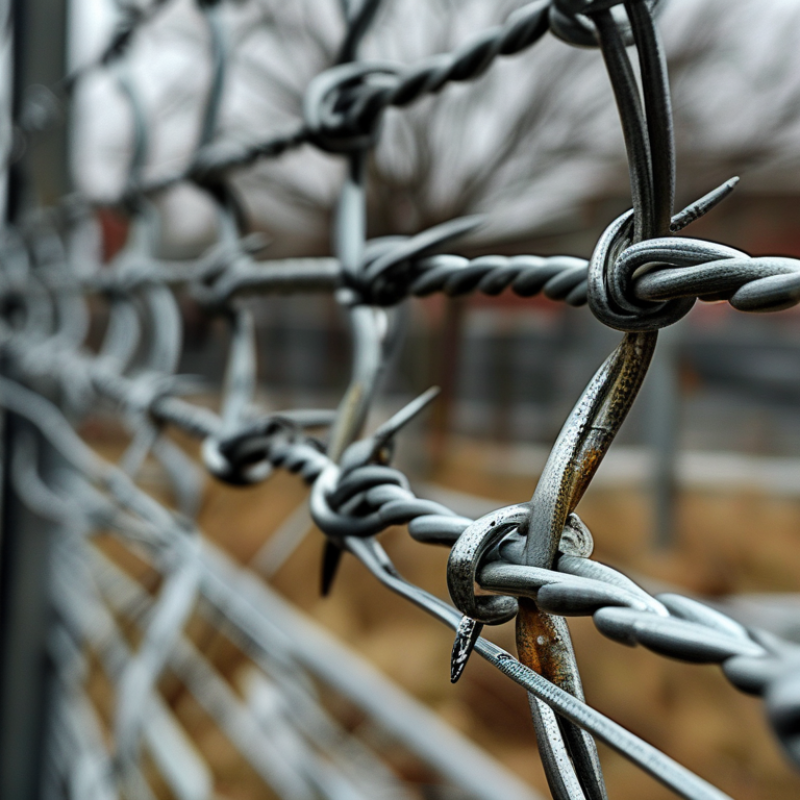
Concertina razor wire is the strongest visual deterrent. Its coiled blades cover long distances quickly and suit remote boundaries, warehouses, and utility sites. Flat-loop razor wire needs less outward space. It fits walls, gates, and narrow compounds with a cleaner profile. Welded razor mesh uses rigid panels instead of loose coils. It offers better structure, clearer visibility, and easier alignment, but installation usually costs more. I would not choose the most aggressive option by default. Site layout matters more than appearance.
According to the 2024 MarketsandMarkets Perimeter Security Market report, physical barriers remain core protection layers, while integrated detection systems continue gaining demand. That finding supports a layered design: fencing should delay access, while lighting, cameras, and controlled gates improve response. Galvanized steel suits most outdoor projects. Stainless steel performs better near saltwater, though its price can be difficult to justify. Blade spacing, core-wire strength, coating thickness, and panel rigidity deserve careful comparison. Product labels alone can mislead.
Tips: Measure the fence line before requesting quotations. Check wind exposure and corrosion risk. Ask for test certificates and coating data. Avoid installing razor fencing beside public walkways without professional risk assessment. A 2023 CISA protective-measures guide also emphasizes layered security and site-specific planning. My practical mistake would be judging protection by blade size alone. A smaller, well-supported system may perform better than a larger, poorly anchored one.
Match the design to your property, threat level, and maintenance plan. Flat-loop fencing suits long boundaries with a compact appearance. Concertina coils create stronger visual deterrence near gates and warehouses. Straight-line wire can support an existing fence without looking bulky.
Galvanized steel suits many normal outdoor environments. Stainless steel performs better near saltwater or chemical exposure. Check blade thickness, core-wire strength, coating quality, and fixing brackets. The most expensive material is not always necessary.
A professional installer should inspect the wall, posts, gates, and ground. Strong masonry usually needs secure anchors. Weak brickwork may crack under tension. A strong barrier needs strong support.
Wooden fencing often needs reinforced posts and additional bracing. Chain-link fencing may require compatible brackets and extra support. Do not attach heavy tension to weak posts. That mistake looks secure, but fails quietly.
Measure the boundary twice, including corners and sloping sections. Check narrow spaces, drainage channels, and shared boundaries. Gate openings need special attention. Small details matter.
Keep safe clearance from windows, walkways, public paths, children, and pets. Use visible warning signs near accessible sections. Review emergency access before installation. Trained installers should follow local safety requirements.
Inspect the system after storms, especially near gates and corners. Look for corrosion, loose brackets, damaged strands, and weak posts. Replace damaged sections promptly. A written maintenance schedule helps, although people sometimes ignore it.
Include materials, installation, inspections, repairs, and eventual replacement. Do not consider only the purchase price. Corrosion-resistant systems may cost more initially. For a dry, low-risk site, that upgrade could be excessive.
Choosing the best razor fence depends on the level of protection, site conditions, and installation goals. Common options include flat-loop, concertina, and welded or reinforced designs, each offering different coverage, deterrence, and flexibility. Material quality is also important: galvanized or corrosion-resistant steel generally provides longer service life, while wire thickness, blade spacing, coil diameter, and structural strength influence overall security. A suitable choice should balance protection with appearance, budget, and the type of property being enclosed.
Before purchasing, evaluate whether the fence can be installed safely on walls, gates, posts, or existing perimeter systems. Consider local weather, ground conditions, access points, and the need for professional installation. Regular inspections can identify rust, loose supports, or damaged sections before they become serious problems. Because razor fence contains sharp components, it should be handled carefully, clearly separated from public areas, and installed with appropriate warning signs. Always review local building, zoning, safety, and property regulations to ensure the design and installation meet legal requirements.
