
Choosing an outdoor dog kennel in 2026 means looking beyond price and appearance. The right setup should give your dog room to move, reliable shelter, and a secure place to rest. It should also fit your yard, climate, and daily routine. A kennel that works well for a small, calm dog may not suit a large, energetic one.
There are several common types, including chain-link runs, modular metal panels, covered kennels, and portable enclosures. Each has trade-offs. Chain-link can offer good airflow, while solid roofing helps block sun and rain. Portable models are convenient, but some may feel cramped or shift on uneven ground. Check the door latch, panel connections, floor surface, and available shade before deciding. Small details matter.
Your dog’s behavior matters, too. A determined jumper or digger may need sturdier panels and a carefully secured base. Still, no kennel replaces supervision, exercise, or time with people. Even a well-built enclosure can become uncomfortable in hot weather or feel isolating if used for long stretches. That part is easy to overlook.
This guide compares the main outdoor dog kennel types and explains what to check for different dogs, spaces, and weather conditions. It focuses on practical features rather than bold promises, because product quality varies between brands. Use the comparisons as a starting point, then measure your yard and your dog before buying. A little doubt is useful here. Better to question a feature than discover its weakness after installation.
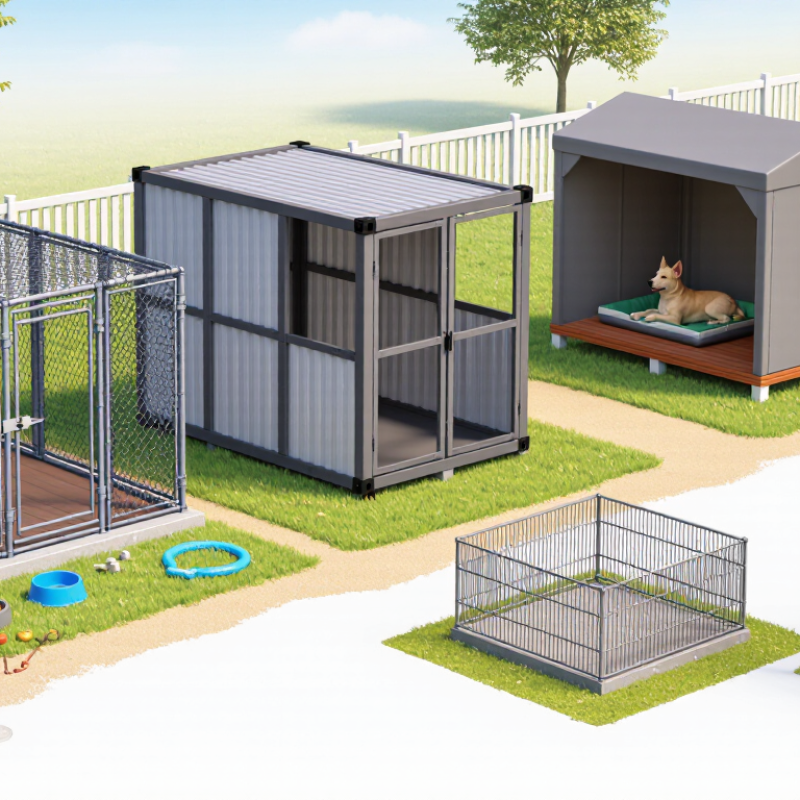
Outdoor dog kennels are commonly classified by structure and intended use. The structure affects strength, airflow, cleaning, and weather protection. Intended use determines size, mobility, and daily comfort.
Portable kennels use folding frames and lightweight panels. They suit travel, temporary housing, or short outdoor stays. Modular runs use connected metal panels, allowing owners to expand the exercise area. They work well for active dogs that need room to move.
Solid-panel kennels provide stronger wind protection and better privacy. However, they may reduce airflow in warm weather.
Roofed kennels are useful in areas with intense sun or frequent rain. A sloped roof can help water drain away from the sleeping space. Raised flooring keeps bedding away from wet ground, but gaps must not trap paws. For overnight housing, choose a structure with secure doors, shaded areas, and enough room for natural movement. Small is not efficient.
Kennels designed for training often emphasize visibility and controlled access. Exercise kennels prioritize length and open movement. Multi-dog systems need separate feeding and resting zones to reduce tension. In practical evaluations, the strongest frame is not always the best choice. Poor drainage, sharp edges, or weak ventilation can undermine an expensive structure. Measure the dog, observe its habits, and reconsider the design as seasons change.
The best outdoor dog kennel in 2026 depends on your dog’s size, breed, and daily energy. Small dogs often suit compact, insulated kennels with solid flooring and low entry points. The space should allow standing, turning, and stretching without wasted exposure to wind. Add shade and a raised bed.
Medium and large dogs usually need a roomy run attached to a weatherproof sleeping area. Strong welded panels work well for active breeds that jump, dig, or push against barriers. High-energy dogs need room to move, not just a larger box. A double-door entry can reduce escape risks during feeding or cleaning.
Short-nosed breeds require excellent airflow and constant shade because they can overheat quickly. Thick-coated northern breeds may tolerate cold better, but they still need dry bedding and protection from freezing rain. Senior dogs benefit from nonslip flooring and a short step into the shelter. Puppies need safer spacing between bars and closer supervision.
Field inspections often reveal one mistake: owners measure the dog, but not the furniture, water bowl, or movement space. I would choose a kennel slightly larger than the minimum, while avoiding an exposed, oversized enclosure. Activity level matters more than appearance. A calm giant breed and a restless small terrier may need very different layouts. Check the kennel daily for sharp edges, loose fasteners, damp bedding, and signs of stress.
Choosing an outdoor kennel starts with usable floor space, not the advertised dimensions. USDA’s Animal Welfare Act uses this minimum area formula for certain dogs: (dog length in inches + 6)² ÷ 144 = square feet. Measure from nose to tail base while the dog stands naturally. For a 30-inch dog, the calculation is 36² ÷ 144, or 9 square feet. That is a regulatory minimum for covered animals, not a comfort target for every pet. More room matters when a kennel also serves as a place to move, rest, and play.
The Association of Shelter Veterinarians’ housing guidelines emphasize space for dogs to stand, turn, lie down, and stretch comfortably. Use that practical test when comparing panel, chain-link, or roofed kennel styles. Can your dog turn without brushing the sides? Can a bed fit without blocking the water bowl? Small details count. A shaded, raised resting area and secure, weather-resistant fencing may improve daily comfort, but they do not replace supervision or exercise. The formula is a useful starting point, not the whole answer. Measure the actual interior area, since frames and attached storage can reduce usable space. And be honest: a kennel that meets the math may still feel cramped.
Outdoor dog kennels differ in how they balance visibility, strength, setup, and weather protection. Chain-link designs offer a familiar, open layout. They let air move freely and make it easy to see a dog from across the yard. Check the bottom edge and gate latch regularly; persistent digging or pushing can expose weak spots. The open mesh offers little shade.
Welded-wire panels usually have rigid, evenly spaced bars joined at their intersections. They can feel sturdier than flexible mesh, though construction quality and wire thickness vary. Run a hand along the panel edges before use. Rough joints may snag a collar or scratch a curious nose. Small dogs also need openings narrow enough to prevent squeezing through.
Modular kennels use separate panels that can be rearranged or expanded. This helps when a yard changes, but every connection needs a firm fit. Covered designs add a roof or shade canopy, which can reduce direct sun and keep part of the floor dry. Useful on bright afternoons. A roof does not replace ventilation, and rain may still blow in from the sides. Choose a level, well-drained spot, add secure shade, and leave enough room for the dog to stand, turn, and stretch. No kennel type solves every problem; inspect it from the dog’s height, where small hazards are easier to miss.
Outdoor kennel types range from open metal runs to covered, modular enclosures, but the best choice depends on daily weather. In hot regions, shade and steady airflow matter more than adding solid walls. In cold or windy areas, a roof and sheltered side can reduce exposure, though they should not trap damp air. A kennel can look excellent in summer and still disappoint during a wet, windy week. Check how rain reaches the sleeping area.
Flooring needs equal attention. Raised, washable panels can keep a dog off wet ground, while concrete is durable but may feel hard and cold. A dry, cushioned resting spot helps. No floor is perfect. Watch for sharp edges, gaps, and surfaces that become slippery when wet. Drainage should carry water away from the kennel rather than leave puddles beneath it; a slight slope and clear runoff path often help.
Security is more than a strong latch. Inspect hinges, roof connections, and gaps a dog could push through, especially after storms. Choose a size that allows comfortable movement, and check that the enclosure cannot tip or shift. Maintenance is easy to underestimate. Remove waste often, rinse surfaces, and look for rust, loose fasteners, or chew damage. I would reassess the setup after the first month; real weather and a dog’s habits can reveal flaws a quick inspection misses.
Relative ratings from 1 (low) to 5 (high) based on typical construction. Maintenance measures ease of cleaning and upkeep; actual performance depends on materials, installation, and local climate.
Insulated panel kennels rate highly for weather protection, while covered metal kennels offer a balance of security and drainage. Choose flooring and shelter suited to your dog and local conditions.
Portable kennels fold for travel or short stays. Modular runs connect panels to create more exercise space. Solid-panel kennels offer extra wind protection but can limit airflow.
A roof helps shield dogs from strong sun and rain. A sloped design can direct water away from the sleeping area. Raised flooring keeps bedding off wet ground.
Look for a secure door, shade, dry bedding, and room to stand, turn, and stretch. A cramped kennel is not a practical shortcut.
Measure the dog, then account for its bed, water bowl, and movement space. A small dog may need low entry points, while a large dog needs a roomy run.
Strong panels can suit dogs that jump, dig, or push barriers. A double-door entry can make feeding and cleaning safer. Room to move matters more than a larger box alone.
Short-nosed breeds need steady airflow and shade. Solid walls may reduce ventilation in warm weather, so check the kennel’s temperature and airflow.
Senior dogs may benefit from nonslip flooring and a short step. Puppies need safe spacing between bars and closer supervision. Small details matter.
Provide separate feeding and resting areas to reduce tension. Watch how the dogs use the space; a layout that looks adequate may still feel crowded.
Check for sharp edges, loose fasteners, wet bedding, and signs of stress. Also look for poor drainage. I might overlook it once, but water can collect quickly.
Choosing the best outdoor dog kennel in 2026 starts with matching its structure and purpose to your dog’s size, breed, temperament, and activity level. Options include chain-link, welded-wire, modular, and covered designs, each offering different levels of flexibility, strength, visibility, and weather protection. To estimate minimum space, use the USDA formula: (Dog Length + 6 Inches)² ÷ 144. Treat this as a starting point, then allow additional room for comfortable movement, rest, and play.
A suitable outdoor dog kennel should also provide protection from sun, wind, and rain, along with secure latches and sturdy construction. Consider flooring that is comfortable and easy to clean, plus effective drainage to prevent standing water. Regular inspection and maintenance help keep the enclosure safe and usable. The right choice balances your dog’s needs with the conditions of your yard, making comfort, safety, and upkeep central to the decision.
