
2026 Top Razor Wire Types for Global Buyers?

Time:2026-09-09 Author:Ethan
0%

Choosing the right razor wire in 2026 requires more than comparing coil prices. Buyers must examine steel grade, zinc or zinc-aluminium coating, tensile strength, blade profile, coil diameter, and installation conditions. A bright roll may look impressive, yet corrosion can begin at cut edges, joints, and poorly protected brackets.

Recent market studies from Grand View Research and MarketsandMarkets identify perimeter security as a growing infrastructure segment. Demand is linked to logistics parks, airports, energy facilities, data centers, and government sites. Their findings also show a wider shift toward integrated protection, combining physical barriers, sensors, lighting, and monitored access. Razor wire remains one layer, not a complete security strategy.

The market is not perfectly tidy. Reported growth rates vary because researchers classify razor wire differently. Some include concertina wire, while others group it under perimeter protection. That difference matters for global buyers comparing supplier claims.

Security technologist Bruce Schneier offers a useful principle: “Security is a process, not a product.” The same lesson applies to razor wire selection. A stainless-steel option may suit coastal exposure, while heavily galvanized wire may serve inland industrial fencing more economically. Blade spacing, bracket design, transport rules, and local installation standards also affect the final result.

This guide compares the leading razor wire types for international procurement. It considers performance, maintenance, climate exposure, installation complexity, and total ownership cost. Product labels alone are not enough. Field conditions decide more than brochures suggest.
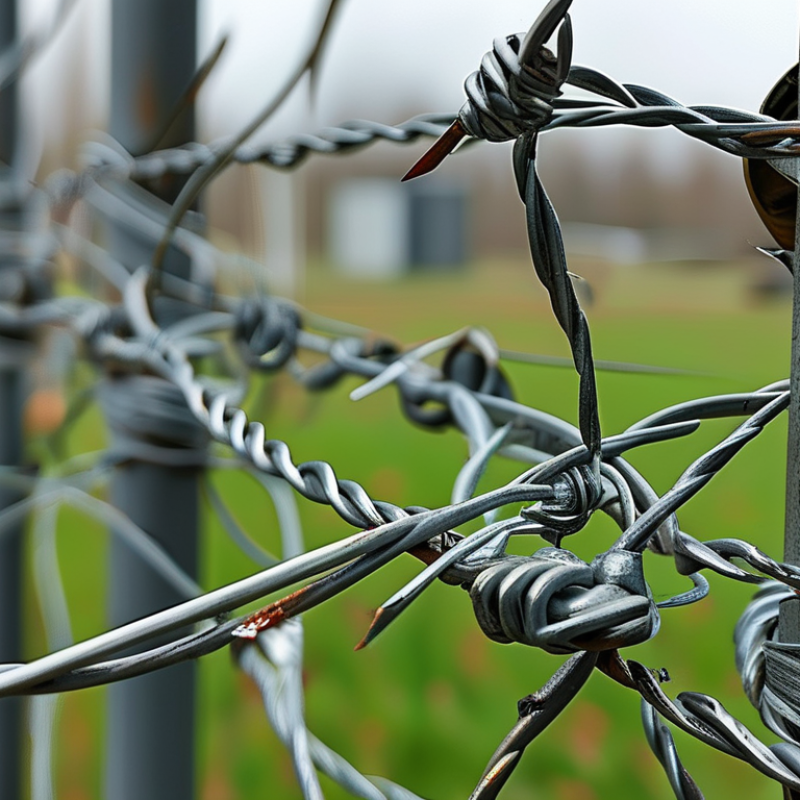
2026 Top Razor Wire Types for Global Buyers?

Razor Wire Basics and Its Role in Modern Perimeter Security

2026 Top Razor Wire Types for Global Buyers

Razor wire is a steel security barrier with sharp-edged blades fixed around a strong core wire. Its purpose is simple: discourage climbing, cutting, and forced entry. Common forms include concertina coils, flat-loop barriers, and welded razor mesh panels. Each design serves a different perimeter condition.

Concertina coils suit long fences, gates, and temporary security zones. Their circular shape creates overlapping protection with limited material use. Flat-loop wire fits narrower fence lines and usually presents a cleaner profile. Welded razor mesh offers greater rigidity, making it useful near controlled entrances, industrial sites, and high-value storage areas. Buyers should check blade spacing, wire diameter, corrosion resistance, tensile strength, and installation hardware. Small differences matter in rain, coastal air, and dusty environments.

Good perimeter planning includes lighting, access control, warning signs, and routine inspections. Razor wire should not be treated as a complete security system. It can cause serious injury when poorly positioned or handled, so trained installers and protective equipment are essential. Local building, workplace, and safety rules also need review before purchase. Requirements vary widely between countries and even between regions. That part is often underestimated. A technically strong product can still be unsuitable if maintenance access is blocked or emergency routes are ignored. Reflective site assessments help reveal these weaknesses before installation.

Razor wire profiles are commonly identified by their blade dimensions. BTO-22 is widely used for general perimeter protection, BTO-30 provides a larger cutting profile, and CBT-60 is designed for higher-deterrence applications where larger blades and wider spacing are preferred. The values shown are representative nominal dimensions; exact specifications may vary by applicable standard and supplier.

2026 Overview of Main Razor Wire Types and Their Designs

2026 Overview of Main Razor Wire Types and Their Designs

Razor wire designs differ by blade shape, core wire, and installation format. Concertina coils use crimped wire and expand into circular barriers. Flat-loop razor wire creates a lower-profile line for walls, gates, and controlled perimeters. Straight razor wire uses parallel strands and needs regular brackets for stable spacing. The geometry matters. Blade length, pitch, and coil diameter influence coverage, visibility, and handling requirements.

A 2024 Grand View Research report identified continued growth in the global perimeter security market through 2030, driven by infrastructure and industrial-site investment. Material selection remains practical. The World Steel Association reported approximately 1.88 billion tonnes of crude steel production in 2023, supporting broad access to steel inputs. Galvanized steel suits many outdoor settings, while stainless steel performs better in humid or corrosive environments. The choice is not always obvious.

For global buyers, installation conditions should guide specification. Heavy-duty concertina coils suit long boundaries, while flat-loop systems can reduce visual bulk near entrances. Razor tape with reinforced cores may resist deformation better, but it can increase weight and installation time. Product drawings should show blade spacing, wire diameter, coil length, and coating thickness. Independent testing and traceable quality records add confidence. Yet, catalog dimensions can be misleading when tension, brackets, and local weather are ignored. A stronger design is not automatically the better design.

How to Choose Razor Wire for Different Security Applications

Choosing razor wire starts with the security objective, not the lowest price. MarketsandMarkets’ 2024 perimeter security report estimates the sector will grow from about USD 9.3 billion in 2023 to USD 12.8 billion by 2028. That growth reflects rising demand for layered protection, but product selection still needs site evidence.

For high-security industrial sites, concertina razor wire offers strong deterrence across long boundaries. Use reinforced supports and controlled spacing. Flat-loop razor wire suits existing fences where outward projection is restricted. It creates a cleaner profile, though it may provide less visual impact. Welded razor mesh works well on gates, panels, and narrow access points. It is rigid and harder to deform.

Coastal facilities need corrosion-resistant steel, such as stainless or properly coated material. Check coating thickness, tensile strength, blade geometry, and weld quality. ISO 9227 salt-spray testing can help compare corrosion performance, but laboratory hours do not perfectly predict local weather. That limitation matters.

ASIS physical asset protection guidance emphasizes risk assessment, layered controls, and documented maintenance. In practice, I inspect fence height, lighting, drainage, camera angles, and emergency access before specifying wire. A sharp product cannot correct a weak gate. Keep it visible. Install warning signs, tamper-resistant fittings, and safe maintenance access in line with local requirements. I would avoid choosing solely from a catalog; even a technically strong design can fail when vegetation, poor tensioning, or unplanned human movement is ignored.

Global Standards, Materials, and Safety Factors for Buyers

2026 Top Razor Wire Types for Global Buyers

Global buyers should compare razor wire by material, profile, coating, and documented performance. Galvanized steel suits many inland projects with moderate weather exposure. Stainless steel performs better near saltwater, humid ports, and chemical environments. Some buyers choose a coated steel core for added corrosion resistance. That choice costs more, but replacement costs can be higher. No material stays perfect.

Blade profiles also affect safety and installation needs. Smaller blades may fit controlled residential or commercial boundaries. Larger profiles can create greater deterrence, but they demand stronger posts and careful handling. Field inspections often find weak supports, not weak wire. The coil must match the fence structure, tension system, and expected wind load. A specification can still miss the point.

Standards differ across countries and project sectors. Buyers should request material certificates, coating data, dimensional tolerances, and independent test records. Check current national requirements before importing or installing the product. Safety planning matters as much as product selection. Trained workers need cut-resistant gloves, eye protection, secure tools, and clear handling procedures. Warning signs should remain visible, especially near public access areas. Leave suitable emergency routes and avoid placement where children or authorized workers could contact the barrier accidentally. Small details matter. Even experienced teams can overlook them.

2026 Top Razor Wire Types for Global Buyers? - Global Standards, Materials, and Safety Factors for Buyers
Razor Wire Type Typical Configuration Common Dimensions Primary Materials Typical Surface Protection Suitable Applications Key Buyer Safety Factors Relevant Standards and Verification Points
Concertina Razor Wire Coil Coiled barrier
Helically formed loops that expand into a continuous anti-climb obstacle.
Coil diameter: 450–1050 mm
Blade spacing: typically 100–150 mm
Core wire diameter: approximately 2.5–3.0 mm
Expanded length: commonly 8–15 m per coil, depending on coil diameter and loop count
High-tensile carbon-steel core wire
Cold-rolled or galvanized steel razor tape
Stainless steel options for severe or coastal environments
Electro-galvanized or hot-dip galvanized steel
Zinc-aluminium alloy coating may be specified for improved corrosion resistance
Stainless steel grades such as 304 or 316 are used where higher corrosion resistance is required
Perimeter fencing, correctional facilities, military sites, utility compounds, transport infrastructure, and temporary security barriers Use approved brackets, ties, and support arms
Install warning signs and controlled-access gates
Require cut-resistant gloves, eye protection, long sleeves, and trained installers
Confirm coil expansion length and support spacing before ordering
Product requirements vary by country and project specification. Verify wire tensile strength, tape thickness, blade geometry, coating mass, coil dimensions, and corrosion-test requirements. ASTM F1910/F1911 may be referenced for long barbed-tape obstacles; confirm the latest edition and scope with the project authority.
Flat Loop Razor Wire Low-profile barrier
Concertina loops are compressed into a flat arrangement for installation on walls, gates, and narrow boundaries.
Loop diameter: commonly 450–900 mm
Overall installed projection: generally 300–500 mm
Blade spacing: typically 100–150 mm
Length depends on loop diameter and compression ratio
Galvanized high-tensile steel wire and galvanized razor tape
Stainless steel available for aggressive atmospheric conditions
Zinc coating or zinc-aluminium alloy coating
Stainless steel provides intrinsic corrosion resistance but still requires suitable fasteners
Existing masonry walls, industrial roofs, gates, restricted compounds, and locations where outward projection must be limited Check wall loading, bracket pull-out resistance, and clearance from public areas
Avoid installation where falling components could endanger pedestrians
Use tamper-resistant fixings and inspect for damaged loops or exposed cut ends
Confirm compatibility with local building, occupational-safety, and public-area regulations. Coating and steel-wire requirements may be assessed using relevant portions of EN 10244-2, ASTM A641, or equivalent national specifications, subject to product applicability.
Straight Razor Barbed Tape Linear strand
Razor tape is supplied in straight runs and fixed to posts, brackets, frames, or mesh fencing.
Common blade pitch: 100–150 mm
Typical core wire diameter: approximately 2.5–3.0 mm
Blade tape thickness: commonly about 0.5 mm
Blade width and length vary by profile, often approximately 15–25 mm wide with 20–65 mm blade projection
Galvanized carbon-steel core wire
Galvanized steel razor tape
Stainless steel for high-corrosion locations
Electro-galvanized, hot-dip galvanized, or zinc-aluminium coated steel
Stainless steel grades selected according to chloride exposure and project life
Top-of-fence protection, gate frames, wall edges, equipment enclosures, and security upgrades where a compact linear product is preferred Maintain a safe installation height and prevent accidental contact from normal public routes
Ensure posts and brackets can resist wind and impact loads
Do not rely on razor wire as a substitute for a structurally adequate fence
Verify tensile strength, blade sharpness, burr control, coating adhesion, and dimensional tolerances. EN 10244-2 and ASTM A641 are commonly used as references for metallic-coated steel wire, but the purchasing specification should state the exact product requirements.
Welded Razor Wire Mesh Panel Rigid panel
Razor-wire strands are welded at intersections to form rigid panels or security screens.
Common panel heights: approximately 1.8–3.0 m
Typical panel widths: approximately 1.5–2.5 m
Common apertures: about 75 × 150 mm or 100 × 150 mm
Wire and blade dimensions depend on the required security level
Galvanized steel line wires and razor tape
Powder-coated galvanized steel may be used where color coding and additional finish protection are required
Stainless steel is available for specialized environments
Hot-dip galvanized before or after fabrication
Zinc-rich or polymer finishing systems may be added when specified
Verify whether cut edges receive equivalent corrosion protection
High-security perimeter fencing, energy facilities, data centers, warehouses, border infrastructure, and industrial sites Confirm panel rigidity, post spacing, foundation design, wind load, weld quality, and tamper resistance
Use compatible clamps and anti-removal fasteners
Provide safe handling procedures because panels can be heavy and have exposed sharp edges
Structural design should follow the applicable national building or fencing code. Coating performance may be checked against ISO 1461 for hot-dip galvanized fabricated steel where applicable, ISO 9227 for salt-spray testing, and equivalent local requirements.
Welded Razor Wire Security Fence Integrated system
Rigid mesh panels are combined with posts, rails, gates, brackets, and optional top-mounted razor wire.
Typical finished fence height: approximately 1.8–3.5 m
Panel aperture and wire diameter are project-specific
Post spacing commonly falls within approximately 2.0–3.0 m, subject to wind and structural calculations
Galvanized structural steel posts and welded mesh
Razor tape made from galvanized carbon steel or stainless steel
Stainless or hot-dip galvanized fasteners
Hot-dip galvanizing, duplex systems, or other specified protective coatings
Coating selection should reflect humidity, salt exposure, industrial pollution, and expected service life
Airports, logistics facilities, government compounds, critical infrastructure, and high-value industrial sites Design the complete system, not only the razor component
Check foundation depth, post section, wind pressure, gate operation, emergency access, and maintenance clearance
Separate public circulation routes from sharp security elements
Use a project-specific structural calculation and local planning approval where required. Confirm coating thickness, adhesion, weld integrity, panel tolerances, and gate safety. ISO 1461, ISO 9227, ASTM A123, and ASTM A153 may be relevant depending on the steel component and coating process.
Stainless-Steel Razor Wire Corrosion-resistant option
Available as concertina, flat loop, straight, or panel-mounted configurations.
Dimensions generally follow the selected configuration
Common core wire diameters: approximately 2.5–3.0 mm
Blade pitch commonly: 100–150 mm
Exact dimensions should be confirmed by technical drawing
Austenitic stainless steel, commonly 304 or 316 grades
Grade selection depends on chloride concentration, chemical exposure, temperature, and cleaning regime
Usually supplied without a zinc coating because the base metal provides corrosion resistance
Passivation and surface-finish requirements should be stated where applicable
Coastal facilities, marine infrastructure, wastewater facilities, chemical plants, food-processing areas, and locations with frequent washing Avoid galvanic contact with dissimilar metals unless electrically isolated
Confirm the actual stainless grade through material certificates
Consider chloride-induced corrosion, especially in marine and splash-zone environments
Request chemical composition and mechanical-property certificates. Verify compliance with the specified stainless-steel designation under the applicable ASTM, EN, or national material standard. A stainless finish does not remove the need for safe handling, signage, and controlled access.
Temporary or Rapid-Deployment Razor Wire Barrier Portable security
Preformed coils or modular units designed for fast deployment and later removal.
Coil diameter commonly: 450–1050 mm
Unit length varies by design, often approximately 8–15 m per coil
Stacking height and footprint depend on transport and deployment requirements
Galvanized high-tensile steel is commonly used
Stainless steel is selected when repeated wet-weather deployment is expected
Galvanized or zinc-aluminium coated steel
Temporary use does not eliminate the need for corrosion protection or inspection
Emergency site protection, construction zones, disaster-response areas, temporary perimeters, and controlled military or logistics operations Establish a deployment plan, exclusion zone, warning system, and recovery procedure
Use suitable lifting and transport equipment
Inspect every unit after deployment and before repacking
Prevent contact with children, animals, vehicles, and emergency access routes
Confirm compliance with local temporary-works, workplace-safety, and public-access rules. The buyer should specify packing method, coil weight, handling points, corrosion condition, and disposal or recycling requirements.
Buyer verification note: Dimensions, coating masses, tensile strengths, blade profiles, and service-life expectations are typical purchasing ranges rather than universal requirements. Before ordering, obtain a technical drawing, material certificate, coating certificate, inspection plan, installation method statement, and confirmation of the standards accepted in the destination country.

Purchasing, Installation, and Maintenance Considerations in 2026

2026 Top Razor Wire Types for Global Buyers

In 2026, buyers should match razor wire design to the site, climate, and legal requirements. Concertina razor wire suits large perimeter fences and temporary security zones. Flat-loop wire offers a lower visual profile for existing walls and narrow boundaries. Welded razor mesh can provide cleaner coverage around industrial facilities, but it needs accurate panel measurements.

Purchasing decisions should include blade spacing, core-wire diameter, coating thickness, tensile strength, and roll length. Galvanized steel may suit dry environments, while stainless steel performs better near saltwater. Ask for material certificates, corrosion-test records, packaging details, and traceable batch information. Local rules may require minimum setbacks, warning signs, restricted access, or professional installation. A low price can hide weak wire or inconsistent blades.

Installation requires trained workers, cut-resistant protective equipment, stable posts, and secure fixing clips. Keep the barrier away from public walkways, children, wildlife, and emergency routes. Maintenance teams should inspect the fence after storms, heavy rain, and nearby construction. Check for rust, loose clips, bent supports, damaged coils, and vegetation contact. Remove corrosion early and replace damaged sections safely. Digital inspection photos can improve records, though they may miss small cracks. That weakness deserves attention. A practical schedule is monthly in harsh climates and quarterly in mild conditions, with immediate checks after unusual weather.

FAQS

: How should buyers choose the right razor wire material?

: Galvanized steel suits many inland sites with moderate weather exposure. Stainless steel performs better near saltwater, ports, and chemical environments. Coated steel may improve corrosion resistance, but it costs more. No material stays perfect.

Which blade profile fits different boundary types?

Smaller blades may suit controlled residential or commercial boundaries. Larger blades can increase deterrence but require stronger posts. The profile must match the fence structure and expected wind load. Bigger is not always better.

What common installation problem should buyers avoid?

Weak supports often cause more trouble than weak wire. Check post strength, fixing clips, tension systems, and panel measurements. A detailed product specification cannot correct poor structural planning. Inspect the supports carefully.

What documents should buyers request before purchase?

Request material certificates, coating data, dimensional tolerances, and test records. Also ask for coating thickness, tensile strength, roll length, and batch information. Traceable records help identify inconsistent materials or production issues. Paperwork can still miss details.

Which razor wire design suits common project conditions?

Concertina designs may suit large perimeter fences and temporary security zones. Flat-loop designs offer a lower visual profile on existing walls. Welded mesh can provide cleaner coverage around industrial facilities. Accurate measurements remain essential.

What safety measures are needed during installation?

Trained workers should use cut-resistant gloves, eye protection, and secure tools. Keep the work area controlled and follow clear handling procedures. Use stable posts and properly secured fixing clips. Slow work is safer work.

How can buyers support legal and public safety requirements?

Check current national and local requirements before importing or installing the product. Rules may cover setbacks, warning signs, restricted access, and professional installation. Keep barriers away from public paths, children, wildlife, and emergency routes. Warning signs should remain visible.

How often should the barrier be inspected and maintained?

Inspect monthly in harsh climates and quarterly in mild conditions. Check after storms, heavy rain, or nearby construction. Look for rust, loose clips, bent posts, damaged coils, and vegetation contact. Digital photos improve records, but small cracks may remain hidden.

Conclusion

This guide explains how razor wire supports modern perimeter security by creating a visible and effective barrier that can help protect facilities, boundaries, and restricted areas. It introduces the main razor wire types expected in 2026, including different blade shapes, coil configurations, materials, and installation designs. By comparing their strength, coverage, corrosion resistance, and visual impact, global buyers can better understand which options suit industrial sites, infrastructure, warehouses, agricultural properties, and other controlled environments.

The article also outlines how to select razor wire according to site conditions, threat levels, climate, and existing fencing systems. It highlights the importance of recognized safety standards, quality materials, responsible handling, warning signs, and professional installation. Buyers will also find practical guidance on evaluating suppliers, planning transport and storage, inspecting the finished barrier, and maintaining it over time. The goal is to support safe, compliant, and cost-effective purchasing decisions while ensuring that razor wire is used responsibly as part of a broader perimeter protection strategy.

Ethan

Ethan

Ethan is a seasoned marketing professional with a deep expertise in our company's innovative product line. With a passion for sharing knowledge and insights, he takes the lead in regularly updating our corporate blog, where he explores industry trends, product features, and effective marketing......